Dynamic vs Static QR Codes: Which Should You Use?
If you’ve ever generated a QR code for free online, you’ve used a static QR code. They’re everywhere. But if you’re using QR codes for anything business-critical, you’ve probably hit their limits.
Let’s break down the differences and help you pick the right type.
What is a static QR code?
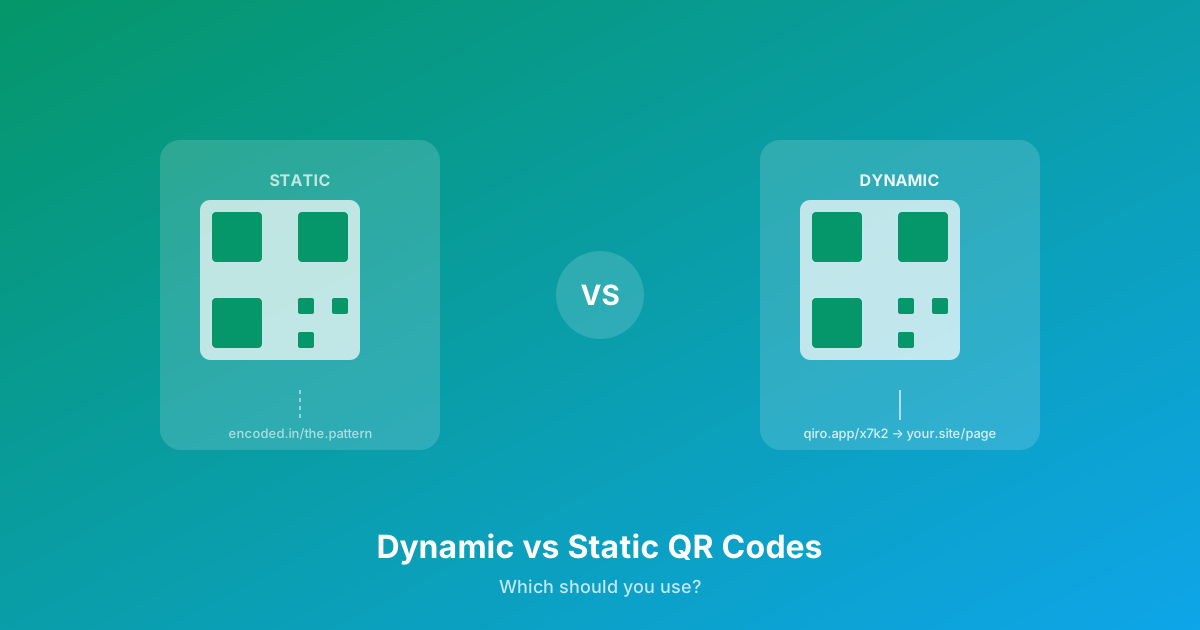
A static QR code encodes data directly into its pattern. Whatever was encoded at creation time is what you get — forever.
Pros:
- Free to generate
- Works offline (the data is IN the code)
- No infrastructure required
Cons:
- Can’t be changed after printing
- No analytics or tracking
- Destination URL is public and visible in the pattern
- Can’t be deleted or deactivated
This makes static codes fine for personal use, but risky for business use. Printed 10,000 product labels, then rebranded? Every single label now points to a dead URL.
What is a dynamic QR code?
A dynamic QR code encodes a short redirect URL (like https://qiro.app/abc123). When scanned, the user’s device hits that redirect, which forwards to your actual destination URL.
Because the final destination is stored in a database — not in the code itself — you can change it at any time.
Pros:
- Edit the destination URL anytime without reprinting
- Full scan analytics (device, location, time)
- Can be paused or deactivated
- Shorter URL = denser, more reliable QR pattern
- Works with any QR code reader
Cons:
- Requires a server (the redirect has to go somewhere)
- Doesn’t work if the server is down
- Costs money (hosting, infrastructure)
The key differences at a glance
| Feature | Static | Dynamic |
|---|---|---|
| Change destination | ❌ | ✅ |
| Scan analytics | ❌ | ✅ |
| Works offline | ✅ | ❌ |
| Editable after print | ❌ | ✅ |
| Requires hosting | ❌ | ✅ |
| Cost | Free | Paid/self-hosted |
When to use static QR codes
- Personal use (WiFi passwords, contact cards)
- One-off events with no reprinting risk
- Situations where you need offline reliability
- Encoding simple data like phone numbers
When to use dynamic QR codes
- Any printed material with a significant volume (packaging, signage, posters)
- Marketing campaigns where you need to measure ROI
- Menus, event programs, or anything likely to change
- A/B testing destinations or seasonal campaigns
The verdict
For most business use cases, dynamic QR codes are worth the extra cost. The ability to update destinations and measure scans fundamentally changes how you can use QR codes in your marketing and operations.
If you’re self-hosting Qiro, your only ongoing cost is a $6/month VPS — far cheaper than any commercial alternative, and you own your data completely.
Start managing your QR codes with Qiro. It’s open source, AGPL-licensed, and you can self-host it in under 10 minutes.